Table of Contents
ToggleBuilding and construction trends in 2026 will reshape how projects get designed, built, and operated. The industry faces pressure from multiple directions: rising material costs, skilled labor shortages, and tighter environmental regulations. These challenges are pushing companies to adopt new technologies and rethink traditional methods.
What’s coming isn’t just incremental change. The construction sector is seeing real shifts in sustainability practices, automation capabilities, and workforce strategies. Understanding these building and construction trends helps developers, contractors, and investors make smarter decisions for the year ahead.
Key Takeaways
- Building and construction trends in 2026 are driven by rising material costs, labor shortages, and stricter environmental regulations pushing the industry toward innovation.
- Sustainable practices like carbon-neutral materials, passive house standards, and water conservation are becoming baseline requirements rather than optional upgrades.
- Advanced technologies including 3D printing, robotics, BIM, and drones are delivering measurable ROI and closing the construction industry’s technology gap.
- Modular and prefabricated construction can reduce project timelines by 30% to 50%, addressing critical time and labor challenges.
- Smart buildings with IoT integration reduce energy consumption by 20% or more while enabling predictive maintenance and improved occupant experiences.
- Workforce shortages remain the industry’s biggest obstacle, requiring expanded training programs, diversity initiatives, and technology adoption to stretch limited labor resources.
Sustainable and Green Building Practices
Sustainability has moved from a marketing buzzword to a baseline requirement. Building and construction trends in 2026 show green practices becoming standard operating procedure rather than optional upgrades.
Carbon-neutral construction methods are gaining traction. More projects now use mass timber, recycled steel, and low-carbon concrete alternatives. These materials reduce embodied carbon, the emissions created during manufacturing and transport. Some estimates suggest buildings account for nearly 40% of global carbon emissions, so material choices matter significantly.
Energy efficiency remains a top priority. Passive house standards, which minimize heating and cooling needs through design, are spreading beyond residential projects into commercial construction. Triple-pane windows, enhanced insulation, and heat recovery ventilation systems are becoming common specifications.
Water conservation features are also expanding. Rainwater harvesting, greywater recycling, and drought-resistant landscaping help projects meet increasingly strict water usage requirements. In regions facing water scarcity, these features often determine whether permits get approved.
Green building certifications like LEED and BREEAM continue to influence project planning. Clients increasingly demand these certifications because they improve asset values and reduce operating costs. The building and construction trends around sustainability aren’t slowing down, they’re accelerating.
Advanced Construction Technology and Automation
Technology adoption in construction has historically lagged behind other industries. That gap is closing fast. Building and construction trends for 2026 feature significant automation and digital tool integration.
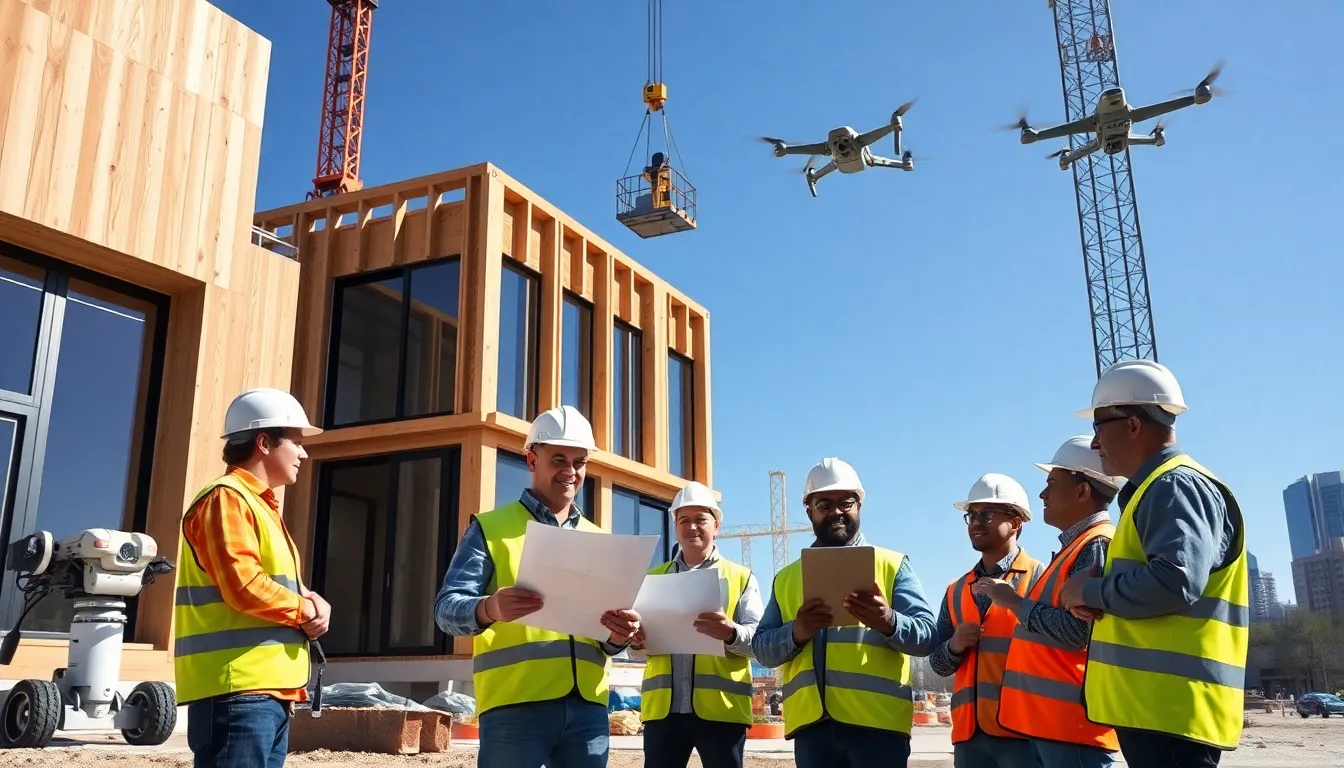
3D printing technology is moving beyond prototypes. Companies are now printing structural components, walls, and even entire small buildings. This approach reduces material waste and speeds up construction timelines. Projects that once took months can sometimes finish in weeks.
Robotics are handling repetitive tasks on job sites. Bricklaying robots, autonomous equipment, and welding machines work alongside human crews. These machines don’t replace workers entirely, they handle dangerous or tedious jobs while people focus on skilled tasks requiring judgment.
Building Information Modeling (BIM) has matured into an essential project management tool. BIM creates digital twins of projects, allowing teams to spot conflicts before construction begins. This reduces costly change orders and delays. Most major projects now require BIM as part of contract specifications.
Drones provide aerial surveys, progress monitoring, and safety inspections. They capture data that would take ground crews days to collect manually. AI-powered analysis of drone footage can identify potential problems before they become expensive fixes.
These building and construction trends in technology aren’t experimental anymore. They’re practical tools delivering measurable returns on investment.
Modular and Prefabricated Construction Growth
Factory-built construction is experiencing a surge. Modular and prefabricated methods address two major industry pain points: time and labor.
Modular construction involves building sections of a structure in a controlled factory environment. These modules then ship to the job site for assembly. Weather delays disappear. Quality control improves because work happens in consistent conditions.
The building and construction trends favor prefab for good reasons. Projects using modular methods can finish 30% to 50% faster than traditional builds. Faster completion means lower financing costs and quicker revenue generation.
Hospitals, hotels, and multifamily housing projects are leading modular adoption. These building types have repetitive room layouts that suit factory production. Student housing developments, in particular, have embraced modular construction.
Prefabrication extends beyond complete modules. Wall panels, bathroom pods, mechanical systems, and electrical assemblies arrive at sites ready for installation. This approach reduces on-site labor needs, a critical advantage given workforce shortages.
Design flexibility has improved dramatically. Early modular buildings looked identical and boxy. Modern manufacturing allows customization that matches traditional construction aesthetics. Most people can’t distinguish a modular building from a conventionally built one.
These building and construction trends toward off-site fabrication will likely expand as the industry seeks efficiency gains.
Smart Buildings and IoT Integration
Buildings are becoming intelligent systems. Internet of Things (IoT) sensors and connected devices transform static structures into responsive environments.
Building and construction trends in 2026 emphasize smart features from the design phase. Developers are installing sensor infrastructure during initial construction rather than retrofitting later. This approach reduces costs and improves system integration.
Energy management leads smart building applications. Sensors monitor occupancy, lighting levels, and temperature throughout a structure. Automated systems adjust heating, cooling, and lighting based on real-time data. These adjustments can reduce energy consumption by 20% or more compared to traditional building operations.
Predictive maintenance is another major application. Sensors track equipment performance and identify problems before failures occur. A motor showing unusual vibration patterns triggers a maintenance alert before it breaks down completely. This prevents costly emergency repairs and extends equipment life.
Occupant experience features are becoming standard in commercial buildings. Mobile apps let tenants control lighting and temperature in their spaces. Touchless entry systems, air quality displays, and wayfinding tools improve daily operations.
Cybersecurity for building systems receives increased attention. As more building functions connect to networks, vulnerability to attacks grows. Construction specifications now include security requirements for IoT devices and building management systems.
These building and construction trends toward connectivity create long-term value through reduced operating costs and improved tenant satisfaction.
Workforce Development and Labor Solutions
Labor challenges remain the construction industry’s biggest obstacle. Building and construction trends in 2026 show companies trying multiple strategies to address worker shortages.
Skilled trades positions remain difficult to fill. The average age of construction workers continues rising as fewer young people enter the field. Companies are raising wages, improving benefits, and offering career advancement paths to attract talent.
Training programs are expanding. Partnerships between construction firms and community colleges create pipelines for new workers. Apprenticeship programs that combine classroom learning with paid on-site experience are growing.
Technology helps stretch limited labor resources further. Prefabrication reduces the number of skilled workers needed on job sites. Automation handles tasks that previously required multiple crew members. Digital tools improve productivity so smaller teams can accomplish more.
Diversity initiatives aim to expand the labor pool. Programs targeting women, veterans, and underrepresented communities are introducing construction careers to populations that traditionally didn’t consider the industry.
Immigration policy affects workforce availability significantly. Many construction companies employ immigrant workers, so policy changes directly impact labor supply. Industry groups continue advocating for visa programs that address skilled worker shortages.
These building and construction trends around workforce development require long-term commitment. Quick fixes don’t exist for labor shortages that took decades to develop.