Table of Contents
ToggleArizona’s desert climate isn’t just tough on air conditioning bills, it’s a magnet for pests that thrive in heat, seek water, and exploit every crack in a home’s envelope. From scorpions hiding in block walls to termites silently chewing through framing, the state’s unique ecosystem demands year-round vigilance. But professional pest control contracts can run $400 to $900 annually, and that’s before emergency call-outs. Homeowners don’t have to choose between an infestation and a blown budget. With a mix of smart DIY tactics, strategic professional help, and preventive measures tailored to Arizona’s seasons, it’s entirely possible to keep critters at bay without very costly.
Key Takeaways
- Arizona’s unique desert climate creates year-round pest pressure that demands specialized attention—subterranean termites, scorpions, and roof rats pose significant structural and health risks that require affordable pest control strategies.
- A combination of DIY methods (sealing entry points, bait stations, diatomaceous earth) and targeted professional help can provide effective affordable pest control in Arizona for $15–$300, compared to $400–$900 annual contracts.
- Seasonal prevention tactics—trimming branches in spring, securing firewood in monsoon season, and inspecting attic vents in fall—reduce pest populations naturally and delay the need for costly treatments.
- Professional pest control services in Arizona typically cost $40–$70 monthly for general pests, but comparing itemized quotes from licensed operators and negotiating discounts can lower expenses significantly.
- Natural and eco-friendly alternatives like essential oil sprays and copper mesh work best for prevention and early-stage infestations, though established colonies require professional-grade treatments for complete elimination.
Why Arizona Homeowners Need Specialized Pest Control
Arizona’s combination of extreme heat, low humidity, and rapid urban sprawl into desert habitats creates pest pressure unlike anywhere else in the U.S. Homes here face threats that rarely trouble properties in wetter, cooler climates.
The state’s clay-heavy soils and concrete-block construction offer countless voids where pests nest. Irrigation systems, common in landscaping, provide water sources that draw insects and rodents year-round. Add in monsoon season’s sudden moisture spikes, and conditions shift fast enough to trigger population booms.
Ignoring pest control in Arizona isn’t just uncomfortable, it’s a structural and health risk. Subterranean termites cause an estimated $1.5 billion in damage nationwide annually, and Arizona ranks among the top five states for infestation rates. Scorpions deliver painful stings that send thousands to emergency rooms each year. Roof rats chew through electrical wiring, creating fire hazards. Valley fever spores, carried by rodent droppings, pose serious respiratory risks.
Common Pests in Arizona and Their Risks
Scorpions are the most notorious. The bark scorpion, Arizona’s only dangerously venomous species, glows under UV light and hides in cool, dark spaces, shoes, folded towels, attic insulation. Stings cause severe pain, numbness, and in rare cases, respiratory distress in children or elderly adults.
Subterranean termites swarm in spring and fall, tunneling through soil to reach wood framing. They’re nearly invisible until damage is severe. A single colony can number in the hundreds of thousands.
Roof rats and pack rats thrive in attics, block walls, and palm trees. They gnaw constantly to keep incisors trimmed, damaging PEX plumbing, romex wiring, and HVAC ducts. Droppings spread hantavirus and salmonella.
Cockroaches, German and American varieties, infest kitchens and bathrooms. They trigger asthma, contaminate food, and reproduce at staggering rates. A single female German roach can produce 30,000 offspring in a year under ideal conditions.
Black widows and brown recluses both inhabit Arizona. Black widows nest in garages, woodpiles, and block-wall voids. Brown recluse bites cause necrotic lesions requiring medical intervention.
Cost-Effective DIY Pest Control Methods for Arizona Homes
DIY pest control won’t eliminate every threat, but it handles the bulk of common invaders and stretches professional service dollars further.
Seal entry points. Walk the home’s perimeter with a tube of outdoor-rated silicone caulk or expanding foam. Target gaps around plumbing penetrations, AC line sets, dryer vents, and weep screed. Scorpions slip through cracks as thin as a credit card, 1/16 inch. Install door sweeps on exterior doors (look for models with a 1/4-inch neoprene seal). Replace torn window screens using 18×14 mesh fiberglass screening and a spline roller.
Bait stations for ants and roaches. Place gel bait (fipronil or imidacloprid-based) in pea-sized dots along baseboards, under sinks, and behind appliances. Ants carry it back to colonies, killing the queen. For roaches, use boric acid dust in wall voids via a hand duster, it dehydrates exoskeletons on contact. Cost: $15–$30 for supplies covering a 2,000-square-foot home.
Diatomaceous earth (DE) works as a barrier around foundations and in attics. Food-grade DE shreds insect exoskeletons as they crawl through it. Apply a thin layer using a duster along baseboards, in attic joists, and around exterior perimeter, but skip it in areas exposed to rain or irrigation, as moisture renders it useless. Always wear an N95 respirator during application: DE is a lung irritant.
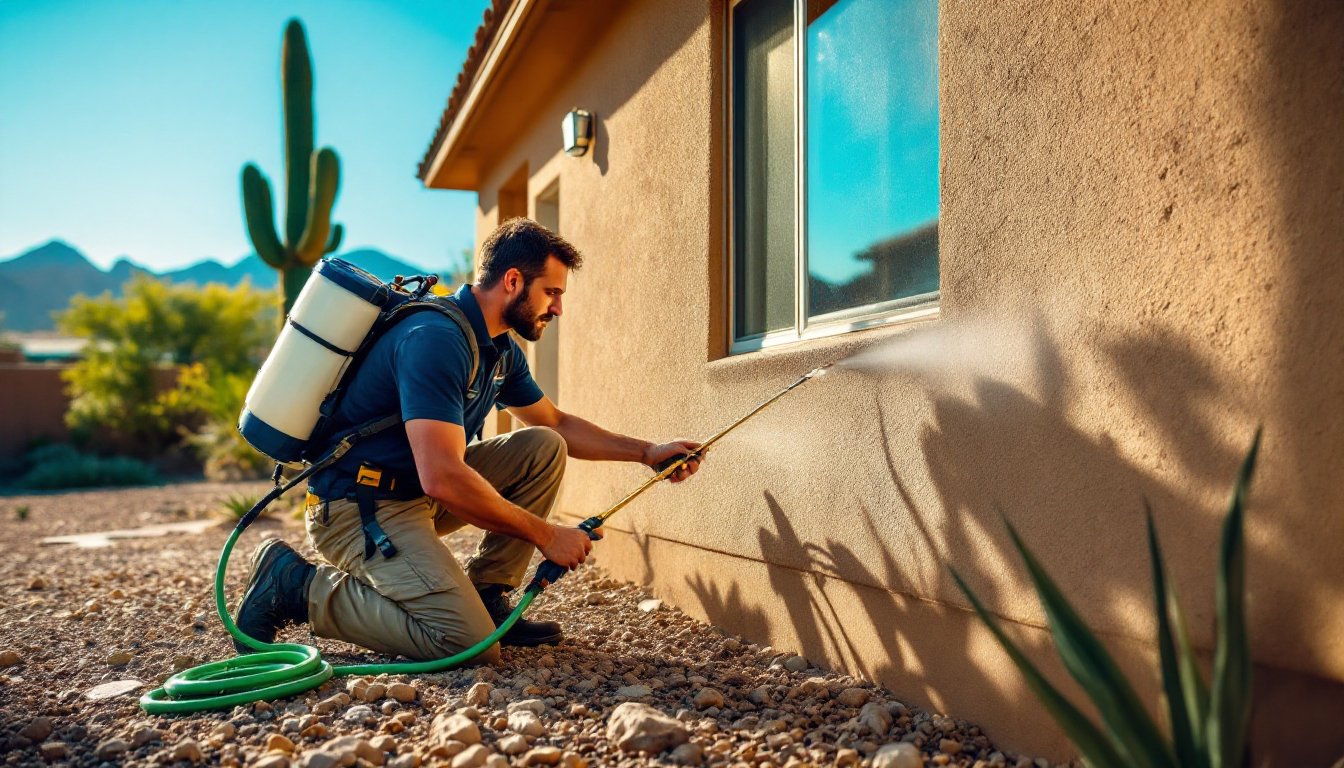
Liquid perimeter treatments using bifenthrin or permethrin concentrates provide months of residual protection. Mix per label instructions (typically 1 oz per gallon) and spray a 3-foot band around the foundation, up exterior walls to windowsills, and along eaves. Reapply every 60–90 days. A $30 bottle treats an average home four times. Avoid spraying near water features or vegetable gardens.
Scorpion black-lighting. Purchase a UV flashlight (385–395 nm wavelength) for $20. Walk the property after dark, scorpions fluoresce bright green. Crush them with pliers or collect in a jar. Check block walls, lumber piles, and landscape rock.
Understanding basic pest control methods helps homeowners tackle early-stage problems before they escalate.
How to Choose an Affordable Professional Pest Control Service
Not every pest problem is DIY-appropriate. Termites, bed bugs, and heavy scorpion infestations require pro-grade tools and licensed applicators. But not all services cost the same.
Get itemized quotes. Request written estimates from at least three companies. Ask what’s included: initial treatment, follow-ups, warranty terms, and retreatment thresholds. Some companies pad quotes with unnecessary add-ons like attic fogging or annual termite inspections when none is warranted.
Compare service models. Monthly or bi-monthly contracts spread costs but may include treatments you don’t need. Quarterly service (every 90 days) often suffices for general pest pressure in Arizona. One-time treatments cost $150–$300 but lack follow-up if pests return.
Check licensing. Arizona requires pest control operators to hold an Office of Pest Management license. Verify the company and technician credentials online. Unlicensed applicators can’t legally apply restricted-use pesticides and offer no recourse if something goes wrong.
Ask about treatment methods. Companies using integrated pest management (IPM), combining exclusion, sanitation, and targeted chemical application, deliver better long-term results than blanket spray-and-pray approaches. Ask what active ingredients they use and whether they rotate chemistry to prevent resistance.
Negotiate contracts. Many companies offer discounts for annual prepayment, military/senior rates, or bundling services (pest control + weed control). Don’t hesitate to ask if they’ll match a competitor’s quote.
Red flags: High-pressure sales tactics, no written contract, vague service descriptions, or refusal to provide proof of insurance. Arizona law requires $300,000 general liability and $100,000 property damage coverage.
Comparing professional vs. DIY approaches helps determine when to call in a licensed technician versus handling it yourself.
Seasonal Pest Prevention Tips to Save Money Year-Round
Arizona’s pest calendar doesn’t follow typical temperate-zone patterns. Pests stay active year-round, but pressure shifts with seasons.
Spring (March–May): Termite swarms peak. Inspect for mud tubes on foundations and discarded wings near windows. Trim trees and shrubs 12 inches away from structures, branches provide highways for ants and roof rats. Service evaporative coolers before use: standing water in pans attracts mosquitoes.
Summer (June–August): Scorpions seek cooler indoor spaces as outdoor temps hit triple digits. Shake out shoes and clothing. Check for gaps under doors nightly. Black widows build webs in garages and sheds: knock them down with a broom weekly. Keep kitchen spotless, crumbs and grease attract roaches that breed in dishwasher motors and refrigerator coils.
Monsoon (July–September): Sudden moisture drives pests indoors. Clear roof drains and gutters to prevent standing water. Store firewood on racks at least 20 feet from the house: it harbors termites, scorpions, and spiders. Fix leaky outdoor faucets and irrigation lines.
Fall (October–November): Rodents seek warm nesting sites as temperatures drop at night. Inspect attic vents for gaps. Set snap traps (not glue boards, those are inhumane and less effective) along walls in garages and attics. Bait with peanut butter or nesting material like cotton balls.
Winter (December–February): Pest pressure lightens, but don’t skip maintenance. Caulk cracks discovered during cooler weather when they’re easier to spot. Service HVAC systems, mice nest in return-air plenums. Review the year’s trouble spots and plan exclusion projects before spring.
Regular use of proven pest control techniques year-round prevents costly reactive treatments.
Comparing Pest Control Prices: What to Expect in Arizona
Pest control pricing in Arizona varies by service type, property size, and infestation severity. Understanding typical ranges prevents overpaying.
General pest control (ants, roaches, spiders): Monthly service runs $40–$70 per visit. Quarterly service costs $80–$150 per treatment. Annual contracts average $400–$600 for a 2,000-square-foot home. Initial treatments cost 2–3× the regular visit rate.
Scorpion control: Specialized treatments with residual insecticides and exterior black-lighting cost $100–$200 per service. Monthly plans run $70–$100. Some companies include UV inspections and sealing recommendations.
Termite treatments: Liquid soil treatments (trenching and injecting termiticide around the foundation) cost $1,200–$2,500 depending on home size and linear footage treated. Bait station systems run $1,500–$3,000 installed, plus $300–$400 annual monitoring. According to HomeAdvisor, the national average for termite treatment is $1,400, but Arizona homes often require more extensive work due to multi-level construction and slab-on-grade challenges.
Rodent control: Inspection, trapping, and exclusion packages range from $300–$800 depending on access difficulty (attics with blown insulation cost more). Monthly monitoring adds $50–$75.
Bed bugs: Heat treatments (raising room temps to 120°F+ for several hours) cost $1,200–$2,500 for a whole home. Chemical treatments run $500–$1,500 and require multiple visits.
One-time vs. contract: One-off visits cost $150–$300 but include no warranty. If pests return in two weeks, you pay again. Contracts include free retreatments within the service period.
Regional variation: Costs run 10–15% higher in Scottsdale, Paradise Valley, and north Phoenix compared to Tucson, Mesa, or Yuma. When researching local pest control options, expect pricing to reflect both market rates and the specific challenges of the service area.
Always request a written estimate before work begins. Arizona law doesn’t cap pest control fees, so comparison shopping pays off.
Natural and Eco-Friendly Pest Control on a Budget
Natural pest control methods work best as preventive measures and for low-level infestations. They won’t eliminate established colonies but reduce reliance on synthetic chemicals.
Essential oils like peppermint, eucalyptus, and tea tree repel ants and spiders. Mix 10–15 drops per cup of water in a spray bottle. Apply along baseboards and entry points weekly. It’s not a knockdown treatment, but it discourages scouting ants.
Vinegar solutions (1:1 white vinegar and water) disrupt ant pheromone trails and clean surfaces roaches frequent. Wipe down counters, sinks, and cabinet interiors weekly.
Neem oil acts as a growth regulator for soft-bodied insects like aphids and whiteflies. Mix 2 tablespoons per gallon of water and spray infested plants. It breaks the reproductive cycle but requires repeated applications.
Sticky traps placed under sinks, behind toilets, and along baseboards monitor pest activity without pesticides. They won’t solve an infestation but reveal problem areas.
Beneficial insects: Release ladybugs for aphid control in gardens (1,500 cost $10–$15) or praying mantis egg cases ($12 each, hatching 100–200 nymphs) for general insect predation. They won’t survive indoors but help in yards and greenhouses.
Physical barriers: Copper mesh stuffed into plumbing penetrations and weep holes blocks rodents and scorpions, neither can chew through it. It costs $15 for a 20-foot roll. Steel wool rusts: copper doesn’t.
Heat treatment: Small item infestations (bed bugs in luggage, pantry moths in grains) can be killed by sealing items in black plastic bags and leaving them in direct Arizona sun for 6–8 hours. Internal temps exceed 130°F, lethal to most insects.
Limitations: Natural methods rarely eliminate established infestations. They work for prevention, minor issues, or in tandem with other effective pest control strategies. For scorpions, termites, or heavy roach populations, synthetic treatments or professional help remain necessary.
For cost guidance on broader home projects, resources like ImproveNet provide context on how pest control fits into overall maintenance budgets.