Table of Contents
ToggleTucson’s desert climate brings more than sunshine and saguaros, it delivers a steady parade of scorpions, roof rats, termites, and cockroaches that can turn a dream home into a nightmare. The combination of dry conditions, monsoon humidity spikes, and year-round warmth creates ideal breeding grounds for pests that don’t take winters off. Professional pest control isn’t a luxury here: it’s baseline maintenance, like changing HVAC filters or sealing roof penetrations. This guide walks through the top-rated services, what separates good providers from mediocre ones, and practical steps homeowners can take to keep critters outside where they belong.
Key Takeaways
- Tucson’s desert climate makes professional pest control essential baseline maintenance, not a luxury, due to year-round pests like scorpions, roof rats, and termites seeking indoor shelter.
- Licensed pest control providers using Integrated Pest Management (IPM) strategies—including inspection, targeted treatment, exclusion work, and monitoring—outperform DIY solutions by addressing root causes rather than just visible insects.
- Top-rated Tucson pest control companies like Responsible Pest Control and Essential Pest Control offer monthly maintenance plans ($40–$75) with service guarantees and specializations in scorpion-proofing and termite inspections.
- Seal gaps larger than 1/8 inch around your home’s perimeter, eliminate moisture sources, keep landscaping 12–18 inches from walls, and maintain clean indoor spaces to prevent re-infestation between professional treatments.
- Verify any pest control service has Arizona Structural Pest Control Commission licensing, liability insurance, and a written service guarantee covering free re-treatments if pests return during the service period.
- Initial pest control treatments cost $100–$200 for standard homes, while termite treatments and scorpion-specific plans run higher ($1,200–$2,500 and $60–$90 monthly respectively), making upfront investment worthwhile to avoid costly structural damage.
Why Tucson Homes Need Professional Pest Control
Tucson sits in the Sonoran Desert, where temperatures swing from triple digits in summer to occasional freezes in winter. That range supports an astonishing variety of pests, many of which actively seek shelter indoors during temperature extremes. Scorpions hunt for cool, dark spaces when the pavement hits 120°F. Roof rats migrate indoors when citrus crops ripen and outdoor food sources shift. Subterranean termites swarm after monsoon rains, targeting any wood-to-soil contact around foundations.
The city’s sprawl into native desert also means homes back directly onto pest habitat. New construction disturbs scorpion dens, sending Arizona bark scorpions, the only dangerously venomous species in the state, into garages and attics. Older neighborhoods with mature landscaping offer harborage for rodents and a buffet for cockroaches.
DIY sprays from big-box stores rarely address the root problem. They kill visible insects but miss the nests, entry points, and conditions that allow re-infestation within weeks. Professional services use Integrated Pest Management (IPM) strategies: inspection to identify species and entry points, targeted treatment with commercial-grade products, exclusion work to seal gaps, and ongoing monitoring. Many Tucson pros also specialize in scorpion-proofing, which involves sealing weep holes, installing door sweeps with zero-clearance gaskets, and applying residual insecticides to exterior block walls.
Structural pests like termites require licensed applicators. Arizona law mandates that termite treatments involve soil treatments or bait systems installed by certified technicians. Skipping professional intervention can void homeowner’s insurance or complicate resale inspections.
Top-Rated Pest Control Companies in Tucson
Several established providers serve the Tucson metro, each with different strengths. When comparing companies, focus on licensing (Arizona Structural Pest Control Commission credentials), service guarantees, and customer reviews that mention follow-up responsiveness, not just initial treatments.
Responsible Pest Control operates valley-wide and emphasizes eco-friendly options alongside conventional treatments. They offer monthly, bi-monthly, and quarterly service plans, with scorpion-specific packages that include blacklight inspections and exterior perimeter treatments. Their technicians carry liability insurance and re-treat at no extra charge if pests return between scheduled visits.
Budget Brothers Termite & Pest Control specializes in termite inspections for real estate transactions and whole-home fumigations. They also handle routine pest service but shine in wood-destroying insect reports (WDIR) required by most lenders. Expect thorough documentation and fast turnaround on inspection reports.
Essential Pest Control focuses on residential monthly plans with an emphasis on customer education. Technicians walk homeowners through findings, explain treatment zones, and provide written recommendations for exclusion work (sealing attic vents, repairing torn screens, caulking pipe penetrations). They’re a solid choice for homeowners who want to understand the why behind each treatment step.
Angi’s directory of top-rated pest control specialists in Tucson provides real customer reviews and ratings, offering a broader snapshot of local providers. Look for companies with at least 4.5 stars, verified business licenses, and recent reviews, avoid outfits that haven’t been active in the last year.
What to Look for When Choosing a Pest Control Service
Start with Arizona Structural Pest Control Commission licensing. Every technician should carry an Applicator or Business license: ask for license numbers and verify them online. Unlicensed operators can’t legally apply restricted-use pesticides and carry no recourse if something goes wrong.
Service guarantees matter. Reputable companies offer free re-treatments if pests return between scheduled visits. Read the fine print: some guarantees require homeowners to complete recommended exclusion work (like sealing gaps under doors) before the warranty kicks in. That’s fair, no spray will work if roof rats have a 2-inch gap under the garage door.
Ask about treatment methods. Modern IPM uses a combination of gel baits (for cockroaches and ants), granular insecticides (for perimeter defense), and liquid residuals (for scorpions and spiders). Companies that rely solely on broadcast spraying often create pesticide resistance and kill beneficial predators. A good provider tailors the approach to the pest and the site, scorpions get different treatment than termites.
Inspection thoroughness separates pros from button-pushers. Quality technicians spend 20–30 minutes walking the exterior, checking attics and crawlspaces, identifying conducive conditions (standing water, wood mulch against siding, gaps in weatherstripping), and documenting findings. You should receive a written report or at least a verbal summary.
Finally, check if the company is insured for both general liability and worker’s compensation. If a technician falls off a ladder on your property or damages landscaping with an overspray, insurance protects you. It’s a red flag if a company hesitates to provide proof of coverage.
For homeowners weighing the decision between professional services and DIY approaches, understanding these criteria helps clarify when to call in the experts.
Common Pests in Tucson and How to Handle Them
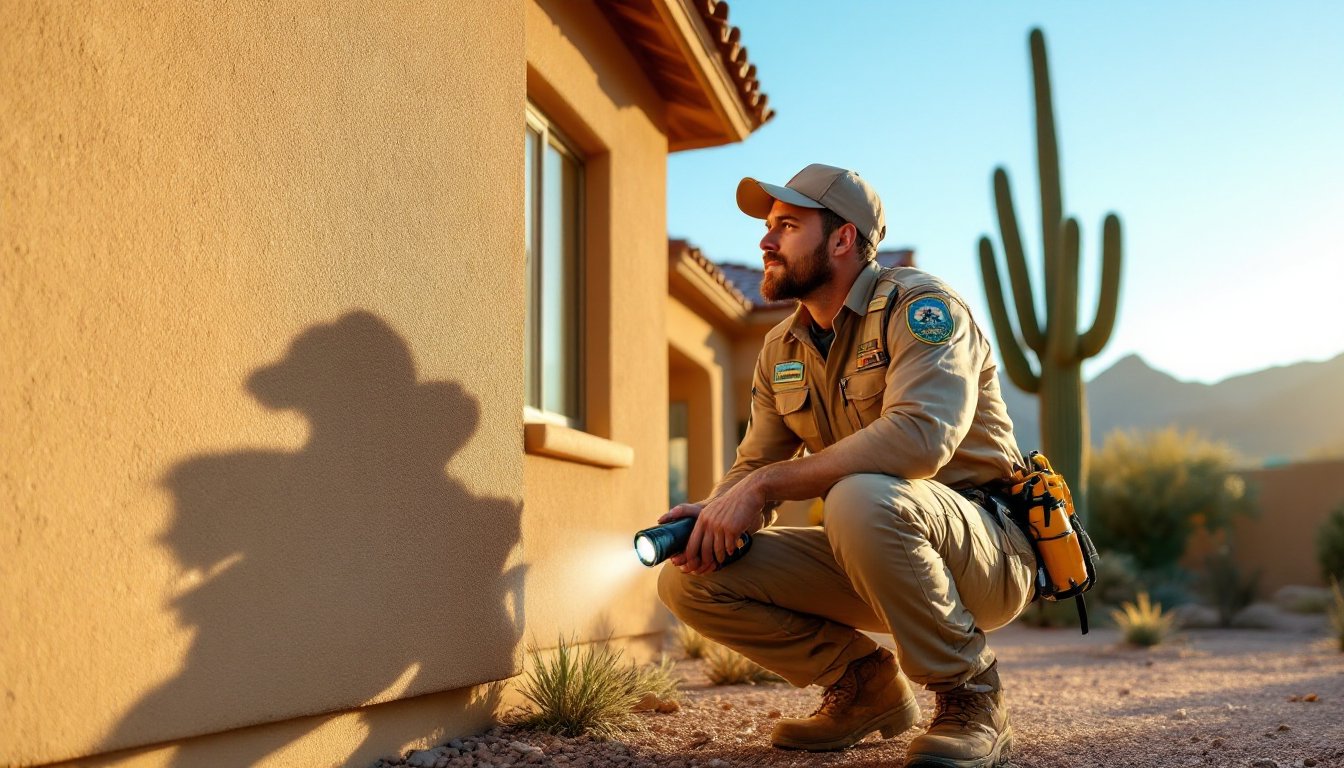
Arizona bark scorpions are the most notorious. They glow under UV light, climb stucco and block walls, and deliver painful stings that can be medically significant for children and elderly adults. Professionals apply microencapsulated residuals to exterior walls, door frames, and attic access points. Homeowners should also remove clutter in garages, shake out shoes before wearing, and install weatherstripping with tight seals.
Roof rats (also called black rats) thrive in Tucson’s citrus-heavy landscaping. They nest in attics, gnaw electrical wiring (a fire hazard), and leave droppings that can carry hantavirus. Treatment involves trapping, exclusion (sealing eave vents with 1/4-inch hardware cloth, trimming tree branches within 6 feet of rooflines), and removing outdoor food sources. Effective pest control techniques often include both mechanical and chemical strategies for rodent management.
Subterranean termites swarm in late spring and early summer after monsoon moisture. They build mud tubes up foundation walls to reach wood framing. Licensed applicators trench around the foundation and apply termiticide (like Termidor or Altriset) to create a treated zone. Bait systems (Sentricon, Advance) are an alternative for homes with wells or sensitive landscaping. Annual inspections are critical: termites can cause thousands in structural damage before homeowners notice.
German cockroaches infest kitchens and bathrooms, breeding in gaps behind appliances and under sinks. Gel baits (like Advion or Maxforce) work better than sprays because roaches carry the toxin back to the nest. Sanitation is non-negotiable: fix leaky faucets, store food in sealed containers, and vacuum crumbs daily.
Desert hairy scorpions, while larger and more intimidating than bark scorpions, deliver milder stings. They’re primarily outdoor pests but wander indoors during monsoon floods. Keep door sweeps tight and apply granular insecticide around the perimeter.
For a deeper jump into identifying and managing common household invaders, resources like Good Housekeeping’s home safety guides offer tested recommendations and expert tips.
DIY Pest Prevention Tips for Tucson Homeowners
Effective prevention starts at the building envelope. Walk your home’s perimeter and seal every gap larger than 1/8 inch, scorpions can squeeze through cracks the thickness of a credit card. Use polyurethane foam for gaps around pipes and vents, copper mesh for larger openings (it won’t rust and rodents can’t chew it), and weatherstripping on doors and windows. Replace torn window screens with 20-mesh stainless steel screening if scorpions are a recurring problem: standard fiberglass is too flimsy.
Eliminate moisture sources. Fix leaky hose bibs, redirect downspouts at least 6 feet from the foundation, and ensure evaporative cooler drains aren’t pooling against the house. Cockroaches and crickets are drawn to standing water, and damp soil near foundations accelerates termite activity. Practical pest control ideas emphasize moisture management as a foundational step.
Keep landscaping 12–18 inches away from exterior walls. Bark mulch retains moisture and provides harborage for roaches, scorpions, and ants: switch to decomposed granite or river rock in a 2-foot zone around the foundation. Trim oleander, bougainvillea, and other dense shrubs so there’s airflow and visibility at the base, tight vegetation creates shaded, humid microclimates pests love.
Store firewood off the ground on metal racks, at least 20 feet from the house. Inspect each log before bringing it indoors: bark scorpions and spiders hitchhike in woodpiles. In the garage, elevate stored boxes on shelving rather than stacking them on the floor where they become scorpion hideouts.
Indoors, reduce clutter. Piles of cardboard, old newspapers, and storage boxes create nesting material for rodents and hiding spots for roaches. Vacuum regularly using a HEPA filter to remove crumbs, pet hair, and insect eggs. In the kitchen, wipe down counters nightly and don’t leave pet food out overnight, both are open invitations.
For newcomers tackling prevention for the first time, guides on pest control for beginners break down tasks into manageable steps without overwhelming jargon.
Cost of Pest Control Services in Tucson
Pricing varies by service type, property size, and pest pressure. Initial treatments typically run $100–$200 for a standard single-family home (1,500–2,500 sq. ft.), covering interior and exterior application with a 30- to 90-day guarantee. Larger homes or properties with heavy infestations may see quotes in the $250–$400 range.
Monthly maintenance plans average $40–$75 per visit, with discounts for longer commitments (quarterly plans often drop to $50–$60 per service). Scorpion-focused plans with blacklight inspections and exterior wall treatments run higher, expect $60–$90 monthly. Some companies bundle services: for example, a quarterly pest plan plus annual termite inspection for a flat $500–$600 annually.
Termite treatments are the priciest. Soil treatments (trenching and applying termiticide) cost $1,200–$2,500 depending on foundation perimeter and soil type (caliche is harder to trench). Bait systems start around $1,500–$2,000 for installation, plus $300–$400 annually for monitoring and bait replenishment. Whole-home fumigation for drywood termites (less common in Tucson but present in older neighborhoods) runs $2,500–$5,000.
One-time rodent exclusion projects, sealing entry points, installing vent screens, trimming vegetation, range from $300 to $1,000+ depending on the number of access points. Many pest companies subcontract this work or refer to handyman services: HomeAdvisor’s contractor matching tools can help source local exclusion specialists with transparent pricing.
Costs fluctuate with market conditions and material availability. In 2026, labor shortages and rising fuel costs have nudged service prices up 10–15% compared to pre-pandemic rates. Get at least three written quotes, confirm what’s included (interior treatment, attic inspection, follow-up visits), and ask about service guarantees before signing a contract.
Conclusion
Tucson’s pest challenges are year-round and varied, but they’re manageable with the right combination of professional service, diligent exclusion, and consistent sanitation. Choose a licensed provider with strong guarantees, stay on top of sealing entry points, and don’t wait until you’re sharing your kitchen with scorpions to act. Prevention always costs less than remediation.