
Table of Contents
ToggleBuilding vs construction, these terms often appear together, but they don’t mean the same thing. People use them interchangeably in everyday conversation. That habit causes confusion in professional settings. The distinction matters whether someone is hiring contractors, studying for a career in the industry, or simply trying to understand project proposals.
Building refers to a specific type of structure or the act of creating one. Construction covers a broader range of activities and project types. Understanding this difference helps clients communicate clearly with professionals. It also helps workers describe their expertise accurately. This article breaks down both terms, explains their key differences, and shows how they connect in real-world projects.
Key Takeaways
- Building refers to enclosed structures (like homes and offices) or the act of creating them, while construction covers all infrastructure projects including roads, bridges, and pipelines.
- All building is construction, but not all construction is building—highway projects involve construction without creating a building.
- Building projects follow predictable phases and building codes, whereas construction projects vary widely in processes and regulatory requirements.
- Use “building” when discussing structures or creating them, and “construction” when referring to the broader industry or non-building work.
- Most major projects combine both building and construction activities, requiring coordination between specialized trades and crews.
- Understanding the building vs construction distinction helps clients communicate clearly with professionals and workers describe their expertise accurately.
Defining Building and Construction
Building has two common meanings. As a noun, a building is a structure with walls and a roof. Think of houses, offices, hospitals, and schools. As a verb, building describes the process of creating such structures.
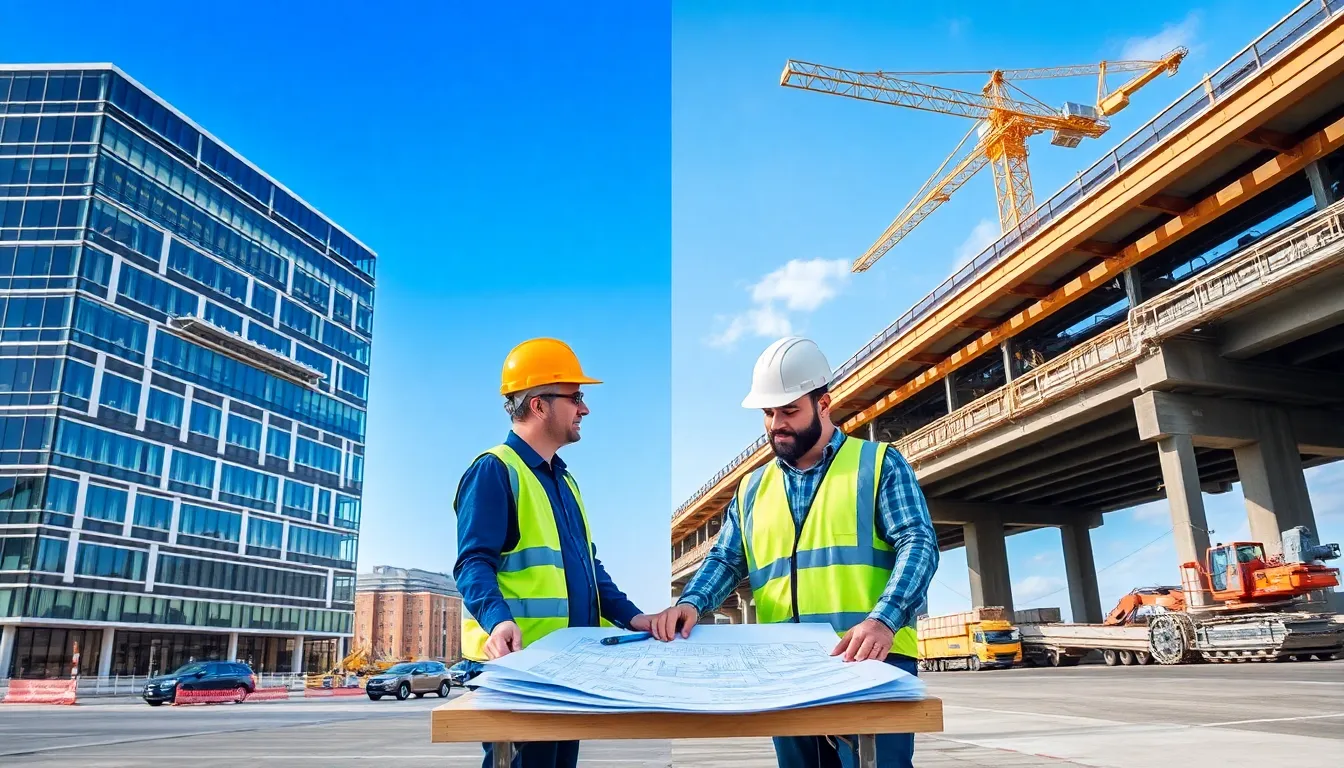
Construction is a broader term. It includes all activities involved in creating physical infrastructure. Roads, bridges, dams, tunnels, and pipelines all fall under construction. The construction industry encompasses building projects plus civil engineering work, industrial installations, and specialty trades.
Here’s a simple way to think about it: all building is construction, but not all construction is building. A highway project involves construction without creating a building. A home renovation involves both building and construction work.
The construction sector employs millions of workers worldwide. In the United States alone, the industry generates over $1.8 trillion annually. Building projects make up a significant portion of that figure, but heavy civil work and industrial construction contribute substantial amounts too.
Professionals in the field distinguish between these terms daily. Architects design buildings. Civil engineers often work on broader construction projects. General contractors might handle both building and construction work depending on their specialization.
Key Differences Between Building and Construction
Scope and Scale
Building projects focus on enclosed structures designed for human occupancy or specific uses. Residential homes, commercial offices, retail stores, and warehouses all qualify as building projects. These projects have defined boundaries, four walls, a foundation, and a roof.
Construction projects can be much larger in scope. A single construction project might span miles of highway or involve multiple structures across a campus. Infrastructure projects like airports combine building elements (terminals) with broader construction work (runways, taxiways, utilities).
Scale also differs between building and construction categories. A small building project might involve a single-family home worth $300,000. A major construction project like a new bridge or tunnel could cost billions of dollars and take years to complete.
The workforce requirements reflect these differences too. Building projects typically need carpenters, electricians, plumbers, and finish workers. Construction projects, especially civil ones, require heavy equipment operators, surveyors, and specialized engineers.
Processes and Phases
Building projects follow predictable phases. Design comes first, followed by permitting, site preparation, foundation work, framing, mechanical systems, and finishing. Most building projects share this basic sequence.
Construction projects vary more in their processes. A road construction project starts with surveying and grading. A bridge project begins with geological studies and foundation engineering. An industrial plant project might start with process design before any physical work begins.
Building codes govern building projects specifically. These codes address structural integrity, fire safety, accessibility, and energy efficiency for occupied structures. Construction projects must comply with different regulations depending on the work type, environmental permits for earthwork, DOT standards for roads, or utility regulations for pipelines.
Project management approaches differ as well. Building projects often use established templates and standardized schedules. Large construction projects frequently require custom planning methods and specialized software to track complex interdependencies.
When to Use Each Term
Context determines which term fits best. Use “building” when discussing enclosed structures or the act of creating them. Say “construction” when referring to the broader industry or projects that include non-building work.
Some examples help clarify the distinction:
- “The building on Main Street houses three businesses.” (noun, a structure)
- “They’re building a new warehouse.” (verb, creating a structure)
- “Construction on the highway expansion will last two years.” (industry work, not a building)
- “The construction company handles both residential and commercial projects.” (broad industry term)
Job titles often use these terms precisely. A building inspector examines structures for code compliance. A construction manager oversees projects of all types. A building contractor focuses on structures, while a construction contractor might work on roads or utilities.
In contracts and legal documents, precision matters even more. Building permits apply to structures. Construction permits might cover earthwork, demolition, or utility installation. Using the wrong term can create confusion or delays.
Real estate professionals typically use “building” when discussing properties. They refer to “construction” when talking about development activity or market conditions. Both terms appear in industry reports, but they describe different things.
How Building and Construction Work Together
Most major projects combine building and construction activities. A new hospital requires building work for the main structure. It also needs construction work for parking lots, utility connections, and site improvements. The project team includes building specialists and construction crews working toward a shared goal.
General contractors coordinate both types of work. They hire building trades for interior work and construction crews for site development. Scheduling these activities requires careful planning, you can’t install a building’s foundation until site construction prepares the ground.
The supply chain serves both sectors. Concrete suppliers deliver to building sites and road construction projects. Equipment rental companies provide tools for carpenters and heavy machinery for earthmoving. This overlap creates efficiency in the industry.
Career paths often cross between building and construction. A carpenter might start on residential building projects and later work on commercial construction. An engineer might design buildings early in their career and manage infrastructure construction projects later.
Building and construction also share common challenges. Labor shortages affect both sectors. Material costs impact building budgets and construction estimates alike. Weather delays happen on all outdoor projects regardless of type.
The distinction between building and construction helps professionals communicate clearly. But the connection between them keeps the industry functioning as a whole.


