Table of Contents
ToggleBugs in the house? Before reaching for harsh chemical sprays, consider a natural alternative that’s been quietly solving pest problems for decades. Diatomaceous earth (DE) is a fine powder made from fossilized algae that kills crawling insects through physical action rather than poison. It’s effective, affordable, and safe when used correctly, making it a go-to option for homeowners tackling everything from ants to bed bugs. This guide walks through how DE works, which pests it controls, application methods for indoor and outdoor use, and safety practices to keep your home bug-free without the toxins.
Key Takeaways
- Diatomaceous earth pest control uses a natural, mechanical approach—sharp fossilized particles dehydrate crawling insects’ exoskeletons without creating chemical resistance.
- Always purchase food-grade diatomaceous earth with less than 1% crystalline silica, never pool-grade, and apply a barely visible dusting to baseboards, cracks, and entry points for best results.
- DE effectively kills ants, bed bugs, cockroaches, fleas, and silverfish, but requires 24–48 hours of contact time and won’t work on flying insects or soft-bodied pests like slugs.
- Proper application demands an N95 respirator, safety goggles, dry surfaces, and thorough ventilation to protect your respiratory system from fine powder particles.
- Reapply diatomaceous earth every 7–10 days for fleas and after rain for outdoor use, and combine it with prevention strategies like caulking entry points and sealing cracks for comprehensive pest management.
What Is Diatomaceous Earth and How Does It Kill Pests?
Diatomaceous earth is a sedimentary rock ground into a fine powder. Under a microscope, each particle shows sharp, jagged edges, remnants of diatom shells composed primarily of silica. These microscopic edges are the secret to DE’s pest-killing power.
When insects with exoskeletons crawl through DE, the sharp particles abrade their protective waxy coating. This causes dehydration: the insect loses moisture faster than it can replace it, leading to death within 24 to 48 hours. The process is purely mechanical, not chemical, which means pests can’t develop resistance the way they do with synthetic insecticides.
DE comes in two forms: food-grade and pool-grade (also called filter-grade). Food-grade DE contains less than 1% crystalline silica and is safe for use around humans and pets when applied correctly. Pool-grade DE is heat-treated, which increases the crystalline silica content to 60% or more, making it hazardous to breathe and unsuitable for pest control. Always verify you’re buying food-grade DE for household applications.
The powder works best on insects that crawl. Flying pests and those without exoskeletons (like slugs) won’t be affected. Understanding this limitation helps set realistic expectations and guides homeowners toward combining multiple approaches when dealing with varied infestations.
Types of Pests You Can Control with Diatomaceous Earth
DE excels against soft-bodied and hard-shelled crawling insects. Here’s a breakdown of common household pests it controls:
Ants: Both carpenter ants and sugar ants cross DE barriers reluctantly. Apply a thin line along baseboards, windowsills, and entry points. Reapply after cleaning or moisture exposure.
Bed bugs: DE penetrates cracks and crevices where bed bugs hide. Dust around bed frames, box springs, electrical outlets, and baseboards. Be patient, it can take several days of contact to kill all life stages.
Cockroaches: German and American roaches both succumb to DE. Focus applications behind appliances, under sinks, and in cabinet voids where roaches travel at night.
Fleas: Sprinkle DE into carpets, pet bedding, and upholstery. Let it sit for 24 to 48 hours before vacuuming. The powder kills adult fleas and larvae but won’t affect eggs, so repeat applications every 7 to 10 days until the life cycle breaks.
Silverfish: These moisture-loving insects frequent bathrooms and basements. Apply DE in dark, humid areas like under vanities and along basement perimeters.
Spiders, earwigs, and centipedes: While not insects, these arthropods also have exoskeletons vulnerable to DE’s abrasive action. Treat entry points and damp crawl spaces.
Slugs and snails lack exoskeletons, so DE won’t kill them. It may act as a mild deterrent due to texture, but dedicated slug baits work better. Similarly, DE has limited effect on flying insects unless they land and walk through treated areas. For comprehensive strategies that include both natural and conventional methods, explore different effective pest control ideas.
How to Apply Diatomaceous Earth for Pest Control in Your Home
Proper application determines DE’s effectiveness. Too much creates visible piles that insects avoid: too little won’t provide adequate coverage. Aim for a barely visible dusting, just enough to coat surfaces without clumping.
Indoor Application Methods
Tools you’ll need:
- Food-grade DE powder
- Dust applicator (hand duster, squeeze bulb duster, or clean ketchup bottle)
- N95 respirator mask (not a cloth mask)
- Safety goggles
- Vacuum with HEPA filter
Application steps:
-
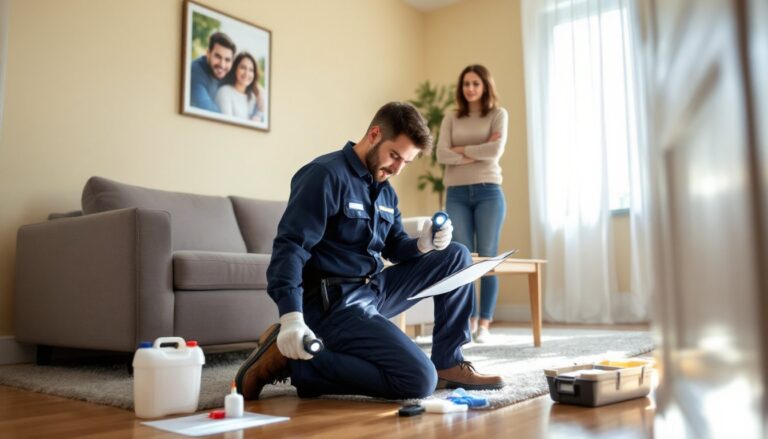
Identify problem areas. Look for pest trails, droppings, shed skins, or live insects. Common zones include baseboards, window frames, door thresholds, pipe penetrations, electrical outlets, and appliance gaps.
-
Clean and dry surfaces. DE won’t stick to oily or wet surfaces, and moisture deactivates its abrasive properties. Wipe down application areas and let them dry completely.
-
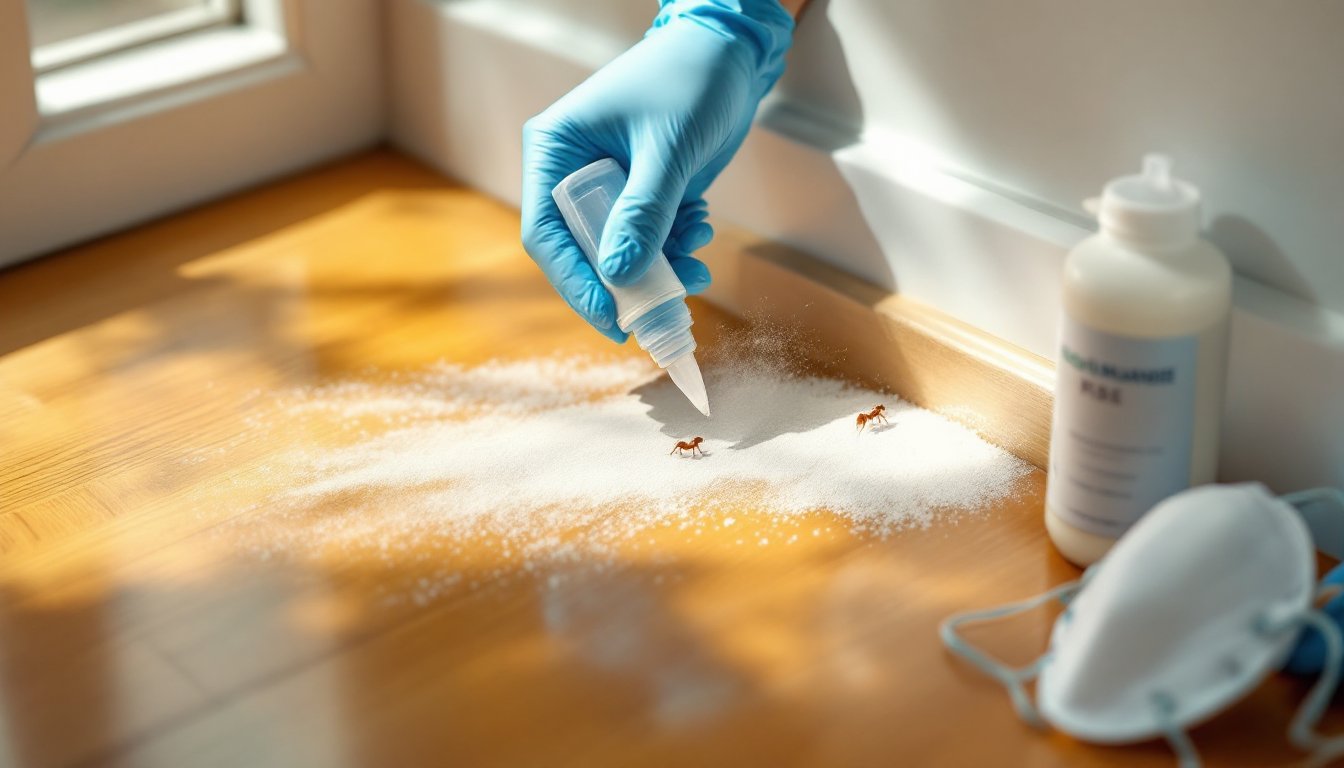
Apply a thin layer. Load your duster and squeeze gently to create a light coating. The powder should be barely visible, if you see white piles, you’ve applied too much. Insects walk around heavy deposits rather than through them.
-
Target cracks and voids. Use a duster tip to puff DE into wall voids, behind outlet covers (with power off), under baseboards, and into cabinet hinge holes. These hidden pathways are insect highways.
-
Leave undisturbed. Let DE sit for at least 24 to 48 hours. For severe infestations, leave it down for several weeks, checking periodically and reapplying as needed.
-
Vacuum thoroughly. Once the infestation clears, vacuum up the DE using a HEPA-filtered vacuum to capture fine particles. Dispose of the vacuum bag or canister contents immediately.
Pro tip: For carpets and rugs, work DE into fibers with a stiff brush before vacuuming. This ensures contact with fleas and larvae hiding at the base of the pile. When tackling widespread issues, it’s wise to reference proven pest control tips that combine DE with monitoring and exclusion.
Outdoor Application Tips
DE works outdoors but requires reapplication after rain or heavy dew. It’s best used in sheltered areas where moisture exposure is minimal.
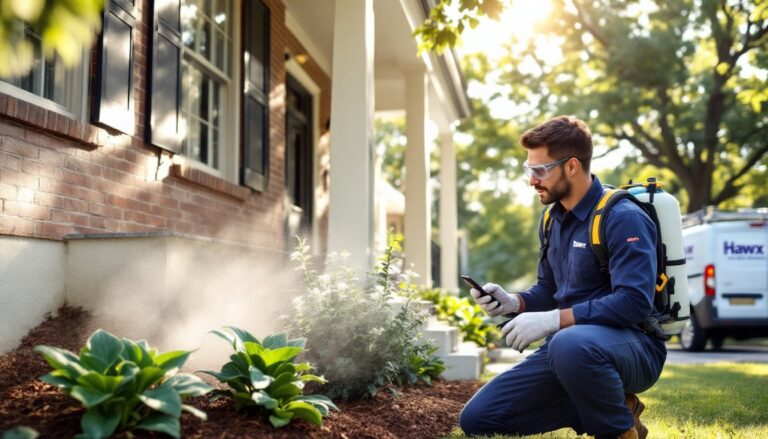
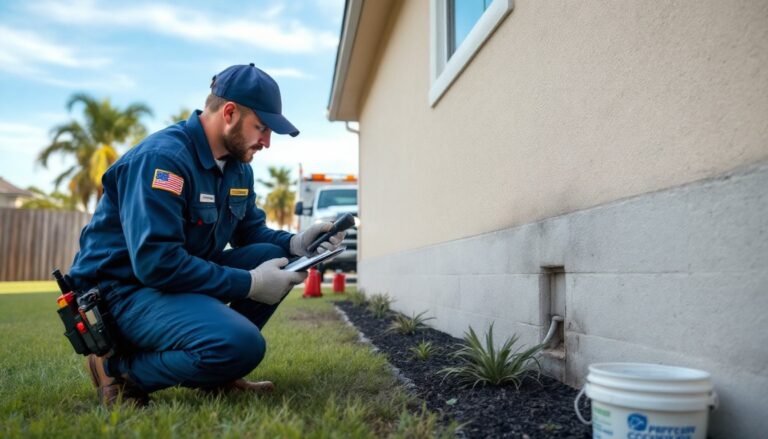
Perimeter barriers: Apply a 2- to 4-inch band of DE around the foundation, focusing on entry points like basement windows, crawl space vents, and door thresholds. Check weekly and reapply after storms.
Garden beds: Dust DE lightly around the base of plants to deter crawling pests like ants and beetles. Avoid coating leaves heavily, as this can interfere with photosynthesis and beneficial insect activity. For slug and snail issues, dedicated baits or copper barriers work better than DE alone.
Ant mounds: Sprinkle DE directly onto fire ant or pavement ant mounds in the early morning or late evening when ants are most active. Disturb the mound slightly to encourage ants to walk through the powder. Multiple applications may be needed.
Tool sheds and outbuildings: Dust DE along sills, rafters, and corners of sheds, garages, and chicken coops. These structures often harbor spiders, roaches, and other pests seeking shelter.
Caution with beneficial insects: DE doesn’t discriminate, it kills beneficial pollinators and predatory insects just as readily as pests. Avoid applying it to flowering plants or areas where bees and ladybugs forage. For gardeners, resources like Gardenista’s hosta care guide mention DE as one remedy among several, emphasizing targeted application to minimize collateral damage.
Safety Precautions and Best Practices When Using Diatomaceous Earth
Food-grade DE is non-toxic if ingested in small amounts, it’s even used as an anti-caking agent in some animal feeds. But, inhaling the fine dust poses respiratory risks, and eye contact causes irritation. Follow these precautions:
Always wear a respirator. DE particles are fine enough to penetrate deep into lung tissue. A cloth mask or surgical mask won’t cut it, use an N95 or P100 respirator during application. This is non-negotiable, especially in confined spaces like crawl spaces or attics.
Protect your eyes. Safety goggles prevent the fine powder from contacting your eyes. Standard glasses don’t provide adequate coverage.
Ventilate application areas. Open windows and use fans to disperse airborne dust. If treating a small room, apply DE and leave the space for several hours while the dust settles.
Keep pets and children away during application. Once the dust settles (typically 1 to 2 hours), the area is safe for re-entry. DE is considered safe around pets when settled, but direct inhalation should be avoided for animals, too.
Avoid over-application. More isn’t better. Thick piles are wasteful, messy, and ineffective. A barely visible dusting provides the same killing power with less cleanup.
Don’t apply to wet surfaces. Moisture clumps DE into a paste that insects easily avoid. Ensure surfaces are dry before treatment and reapply after cleaning or spills.
Store DE properly. Keep it in a sealed container in a dry location. Moisture degrades its effectiveness, and loose powder creates a mess.
Disposal: Sweep or vacuum spent DE and dispose of it with regular trash. It’s inert and poses no environmental hazard once settled.
When to call a pro: DE handles light to moderate infestations well, but severe or structural pest problems may need professional intervention. If you’re dealing with termites, extensive carpenter ant damage, or persistent bed bug infestations that don’t respond to DE after several weeks, consult a licensed pest control professional. Building codes and landlord-tenant laws may also require professional treatment documentation in multi-family dwellings. Those new to pest control basics should start with small-scale applications to build confidence before tackling larger projects.
Choosing the Right Diatomaceous Earth Product for Pest Control
Not all DE products are created equal. Here’s what to look for when shopping:
Food-grade certification: This is the only type safe for household pest control. The label should explicitly state “food-grade” and list crystalline silica content below 1%. Pool-grade or filter-grade DE is chemically different and dangerous to breathe, never substitute it for pest control use.
Fine milling: Finer powder penetrates cracks better and provides better coverage with less product. Some brands offer “micro-fine” or “ultra-fine” DE specifically for pest applications.
Pure vs. formulated: Pure DE contains only diatomaceous earth. Some products add ingredients like essential oils (peppermint, cedar) or pyrethrins for added repellent or knockdown effect. These can boost performance but may introduce allergens or reduce safety for pets. For straightforward applications, pure DE works fine.
Packaging and applicators: DE is sold in bags from 1 to 50 pounds. For typical household use, a 4- to 10-pound bag provides enough material for multiple applications. Some products include a basic puffer applicator: others require purchasing a separate duster. Hand-pumped dusters (like the Pest Pistol or JT Eaton Bellow Duster) offer better control than squeeze bottles and reduce airborne dust.
Price comparison: Expect to pay $1 to $2 per pound for food-grade DE in smaller quantities, with bulk purchases dropping closer to $0.50 per pound. Higher prices don’t always mean better quality, check the grade and silica content rather than relying on brand alone.
Where to buy: Home improvement stores, farm supply retailers, and online marketplaces all carry food-grade DE. Read reviews to ensure the product is actually food-grade and arrives as described. Trusted home improvement resources like The Spruce and Good Housekeeping often review pest control products and can help guide purchasing decisions.
Shelf life: DE doesn’t expire if kept dry. A single bag can last years, making it a cost-effective addition to your pest control toolkit. Homeowners comparing DIY methods versus professional services often find that DE offers a low-cost, low-toxicity option that complements other preventive measures.
Application equipment: If you plan to treat regularly, invest in a quality duster. The right applicator reduces waste, improves coverage, and minimizes dust inhalation. For one-time or occasional use, a repurposed condiment bottle with a narrow tip works in a pinch, just drill a slightly larger hole if needed and squeeze gently.
By selecting the right product and tools, homeowners can deploy diatomaceous earth pest control effectively, safely, and economically. It won’t solve every pest problem, but it’s a solid tool in a broader integrated pest management strategy that prioritizes prevention, monitoring, and targeted intervention.